
Mercedes-AMG goes electric — and it's rewritten the rules
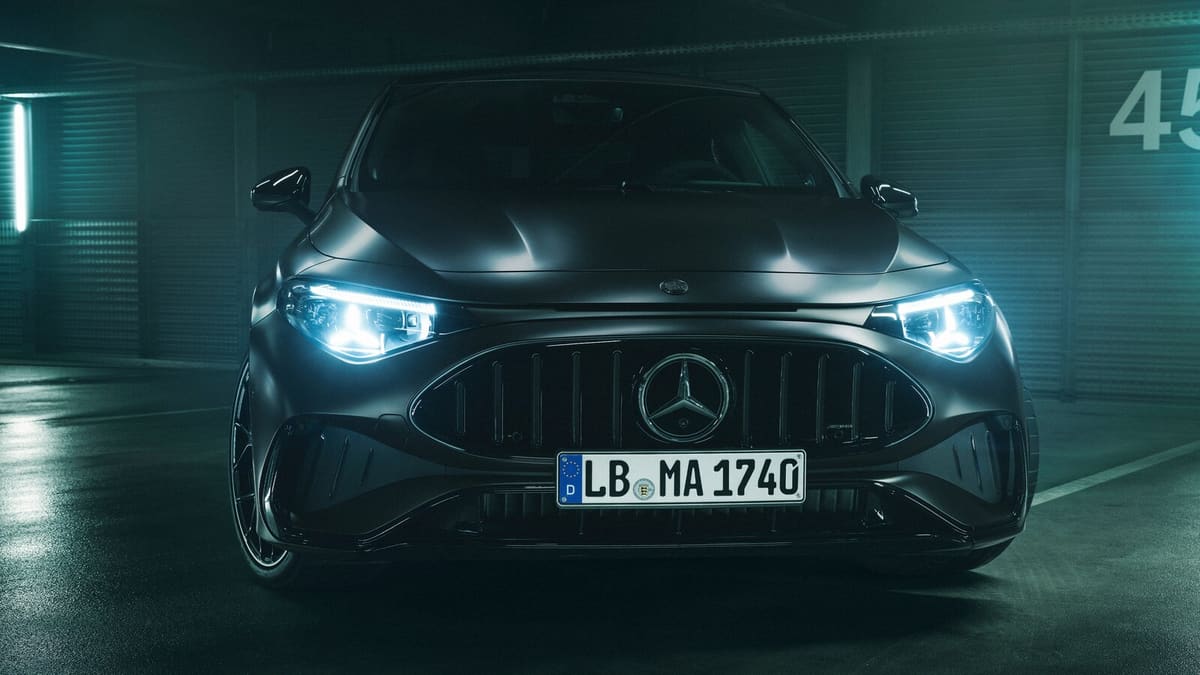
For decades an AMG badge meant a big engine and a bigger soundtrack; the new electric CLA 45 keeps the ferocity and drops the fuel — a shift that tells you where fast Mercedes are heading.
Unveiled at the 2026 Goodwood Festival of Speed, the Mercedes-AMG CLA 45 is the division’s first properly hardcore electric car, and the numbers make the point emphatically. This is a compact four-door that produces around 671bhp, and it does so in a way no previous AMG could.
A genuinely clever machine
Power comes from a bespoke three-motor layout — one on the front axle, two at the rear — supplied in part by British specialist Yasa, whose slim axial-flux motors are lighter than conventional designs. The result is roughly 1,297lb ft of torque, active all-wheel drive, and a 0-62mph time of about 3.0 seconds. That is supercar pace from a sensible-looking saloon, which has long been the AMG trick; only the method has changed.
Usefully, it is not a one-dimensional drag racer. A usable battery of around 94kWh gives a quoted range of up to roughly 416 miles for the saloon, and charging peaks at 330kW, enough for a 10-80% top-up in the region of 22 minutes. To keep drivers who mourn the old V8s onside, AMG has also engineered a synthetic engine-like soundtrack — a detail that will divide opinion, but sits neatly within the brand’s theatrical tradition.
What it signals
The significance is bigger than one car. If AMG — a name built on combustion drama — can deliver an electric model this fast, this usable and this convincing, the argument that performance and electrification are incompatible looks increasingly thin. This is the same story now unfolding at the luxury end with the first electric Range Rover: the established order is being quietly redrawn.
The used-buyer’s view
Most readers will encounter a car like this on the used market rather than the configurator, and a performance EV demands the same clear-eyed approach as any fast car — arguably more. Instant torque and heavy kerb weights are hard on tyres, brakes and, on an EV, the battery, so evidence of careful ownership matters enormously.
Mercedes models reward diligence, and it pays to go in informed — our summary of common Mercedes-Benz problems is a sensible starting point, while our overview of Mercedes electric cars sets the wider range in context. Before any money changes hands, insist on a full service history, run a complete vehicle history check to rule out accident damage and clocking, and — on any EV — obtain a battery State of Health report. Our guide to what to watch out for when buying a used car covers the fundamentals that apply whatever the badge on the bonnet.
The verdict
The electric CLA 45 is a statement car: proof that AMG’s engineering ambition has survived the switch to batteries intact. Whether it stirs the soul the way its V8 predecessors did is a question only a proper drive can settle, and one worth reserving judgement on. What is already clear is that fast, everyday-usable electric cars are here in earnest — and that the used-EV bargains now filling the forecourts are only the beginning of that story. For buyers, the advice is unchanged: be dazzled by the performance, but let the paperwork and the battery health make the decision.
Frequently asked questions
How powerful is the electric Mercedes-AMG CLA 45?
It produces around 671bhp from a bespoke three-motor setup, with roughly 1,297lb ft of torque and a 0-62mph time of about 3.0 seconds.
What range does the AMG CLA 45 electric have?
Mercedes quotes a usable battery of around 94kWh and up to roughly 416 miles for the saloon, with rapid charging at up to 330kW for a 10-80% top-up in about 22 minutes.